
✍🏿 Dr. Edwin Musiime
Director General Housing Development Agency Africa.
Author Real Estate: Rethinking Africa’s Housing Future.
What Africa Can Learn from the 2026 MIPIM Conference in Cannes.
Each year, the global real estate community gathers in the city of Cannes for one of the most influential property and urban development events in the world: MIPIM.
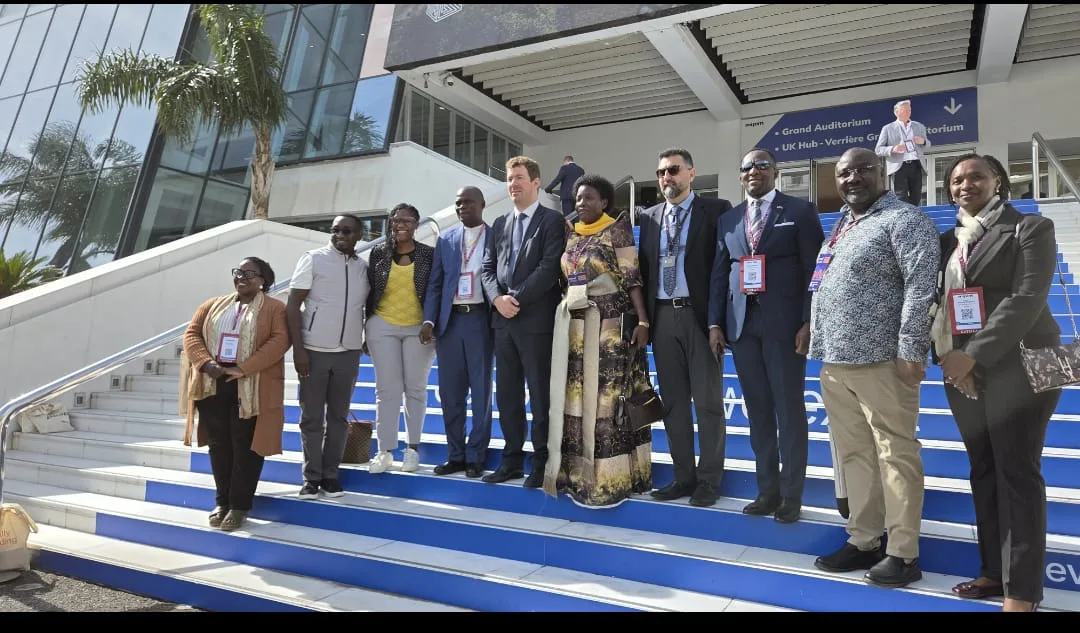
The 2026 edition has brought together investors, developers, policymakers, city leaders, and urban planners from across the globe to discuss the future of cities, housing, infrastructure, and sustainable development.
The conference, running throughout the week and concluding on Friday, continues serving as a global platform for shaping the direction of real estate and urban development.
For Africa, gatherings like MIPIM are presenting an important opportunity, not only showcasing the continent’s immense urban potential, but also learning from global best practices that can help address some of its most pressing urban challenges.
One of the most critical lessons emerging from this year’s discussions is the importance of de-risking housing markets to attract capital.
Across many sessions, including the discussion titled “De-Risk Housing: Capital Will Follow,” participants are emphasizing a clear message: global capital for housing exists, but investors are seeking environments where risks are understood, managed, and reduced.
Housing is no longer being viewed simply as a social issue; it is increasingly being recognized as a financial and investment ecosystem.
When governments are providing clear policies, transparent land systems, reliable infrastructure, and stable regulatory frameworks, investment is naturally following.
For African cities experiencing rapid population growth, this insight is particularly relevant.
Urban populations across the continent are expanding faster than housing supply, with millions of families moving into cities each year in search of opportunity.
Yet access to affordable and well-planned housing continues remaining limited for many households.
However, the challenge is not only about the lack of capital. In many cases, the real issue lies in the structure of housing markets.
Investors are often facing uncertainties related to land ownership, planning approvals, infrastructure access, and financing mechanisms.
These risks are discouraging large-scale private investment, even though the demand for housing remains enormous.
One important lesson Africa is drawing from global discussions at MIPIM is the need for stronger public-private collaboration.
Governments alone cannot deliver the scale of housing required for rapidly growing cities. By focusing on providing serviced land, infrastructure, and enabling policies, public institutions are creating the conditions for the private sector to mobilize capital, innovation, and efficiency in delivering housing at scale.
Another important takeaway from the discussions in Cannes is the growing focus on sustainable and climate-resilient development.
Cities across the world are designing housing projects that are environmentally responsible, energy efficient, and resilient to climate risks.
As Africa continues urbanizing at an accelerated pace, integrating sustainability into housing development will be essential for ensuring that future cities are not only livable but also resilient.
Housing finance is also remaining a central topic of discussion.
In many parts of the world, long-term financing systems, such as mortgages, housing funds, and credit guarantees, are enabling millions of households to access home ownership.
In contrast, many African countries are still lacking deep and inclusive housing finance systems, limiting the ability of families to purchase homes over time.
Strengthening these financial structures will be crucial unlocking housing demand and supporting more inclusive housing markets.
Perhaps the most powerful message emerging from the ongoing conversations in Cannes is that housing should be viewed as an economic engine rather than merely a social program.
A thriving housing sector is stimulating construction industries, creating employment, expanding infrastructure, and strengthening financial systems.
In this sense, investing in housing is ultimately investing in national development.
For Africa, the opportunity is immense.
The continent is hosting some of the fastest-growing cities in the world, and if managed strategically, this urban growth could become one of the most powerful drivers of economic transformation in the coming decades.
However, achieving this vision will require coordinated action between governments, investors, developers, and communities.
Events like MIPIM are reminding the global community that solutions to urban challenges rarely emerge in isolation.
Instead, they are emerging through collaboration, knowledge exchange, and shared commitment to building better cities.
As Africa continues looking toward the future, the lessons from the ongoing conversations in Cannes are becoming increasingly clear: reducing risk, strengthening partnerships, unlocking financing, and planning cities intentionally.
When these foundations are coming together, the capital, innovation, and momentum required to close the housing gap will naturally follow.
In the end, the question is not whether Africa possesses the potential to solve its housing challenge.
The real question is whether the continent is ready to create the conditions that will allow that potential to be fully realized.